Published July 20, 2026 · by Glacier Roofing
Key takeaways
- Standing seam hides its fasteners under raised seams. Corrugated and ag-panel roofs screw straight through the face. That is the biggest difference in how they perform out here.
- Concealed-fastener standing seam is the best long-term profile near saltwater and often lasts 50-plus years. Exposed-fastener panels run 20–40 years and suit barns and outbuildings.
- Near the water, spec 24-gauge steel with a marine-grade Kynar 500 / PVDF finish and rust-resistant fasteners and clips, no matter the profile.
- Stone-coated steel gives you a shingle or shake look with metal toughness, and it sits between the two on price and lifespan.
- Every exposed screw is a future leak in our wet, windy Whatcom winters. That's why we recommend standing seam for the house you live in.
Not every “metal roof” is the same product. Out here, the differences decide whether your roof lasts 20 years or 50. Whatcom County homeowners weigh three profiles: standing seam, corrugated or exposed-fastener panels, and stone-coated steel. They act very differently under our wet winters, foothill snow load, salt air near the water, and the Fraser/Nooksack outflow wind that funnels down the valleys. This guide compares them on what matters: where the fasteners live, how long each lasts, what it costs, and how it holds up near saltwater.
Standing seam uses hidden fasteners for a premium, 50-plus-year roof. Corrugated and exposed-fastener (ag) panels are screwed straight through the face. They cost less and work well on barns and outbuildings. Near saltwater, concealed-fastener standing seam in 24-gauge Kynar 500 steel outlasts exposed-fastener panels, whose washers and screws rust and back out.
Standing seam vs. corrugated vs. exposed-fastener: what’s the difference?
The main difference is where the fasteners live. Everything else follows from that.
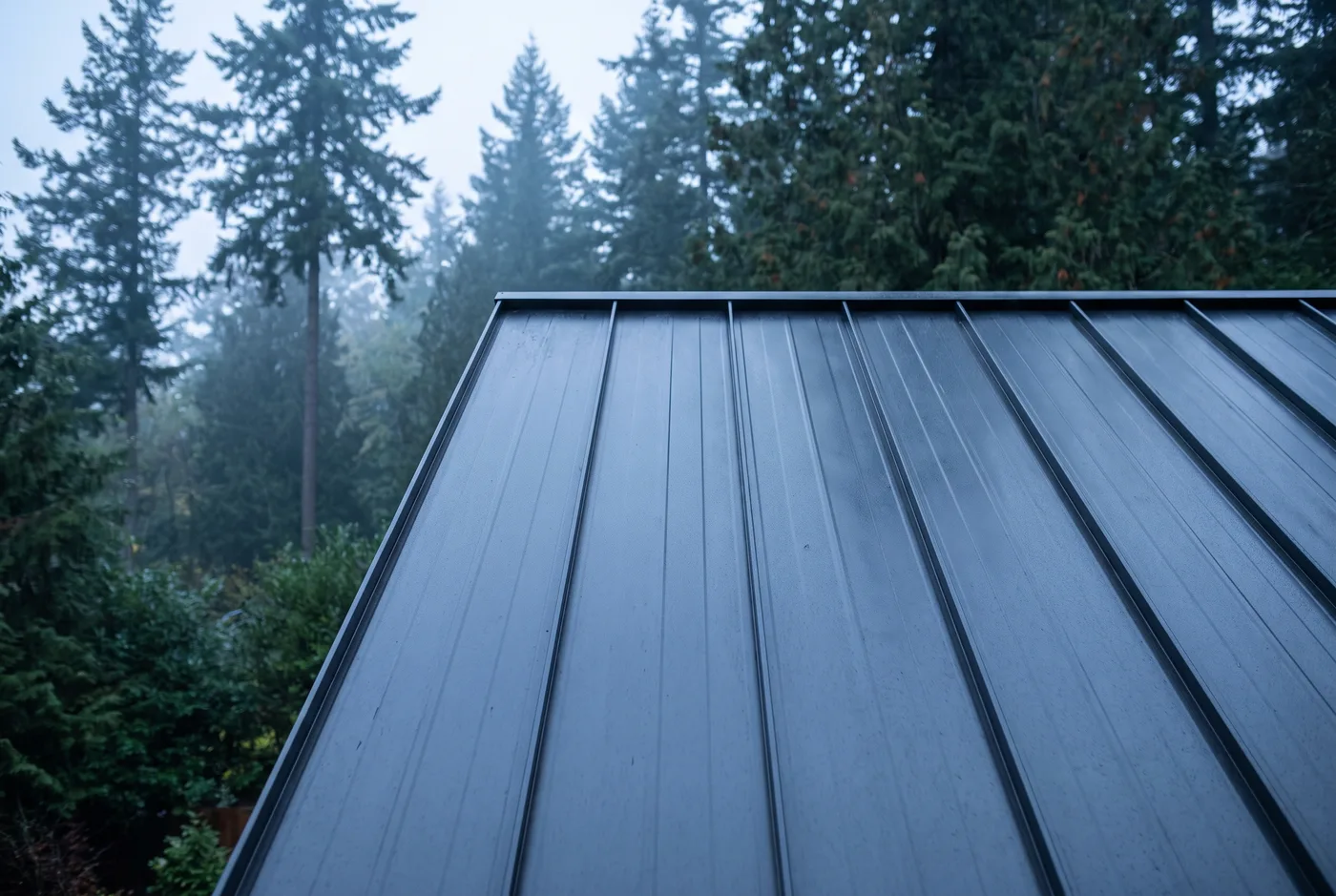
Standing seam panels lock together along raised vertical seams. The clips that hold them to the deck hide beneath those seams. Nothing punches through the flat, water-shedding surface. That’s the profile you see on well-built Whatcom homes: clean vertical lines, no visible screws.
Corrugated and exposed-fastener panels (often sold as ag-panel or R-panel) screw straight through the face of the metal. A neoprene or EPDM washer under each screw head seals the hole. They’re the wavy or ribbed panels you see on barns and shops. They cost the least of any metal roof and go on fast. But every screw is a small hole through the surface that’s supposed to keep water out.
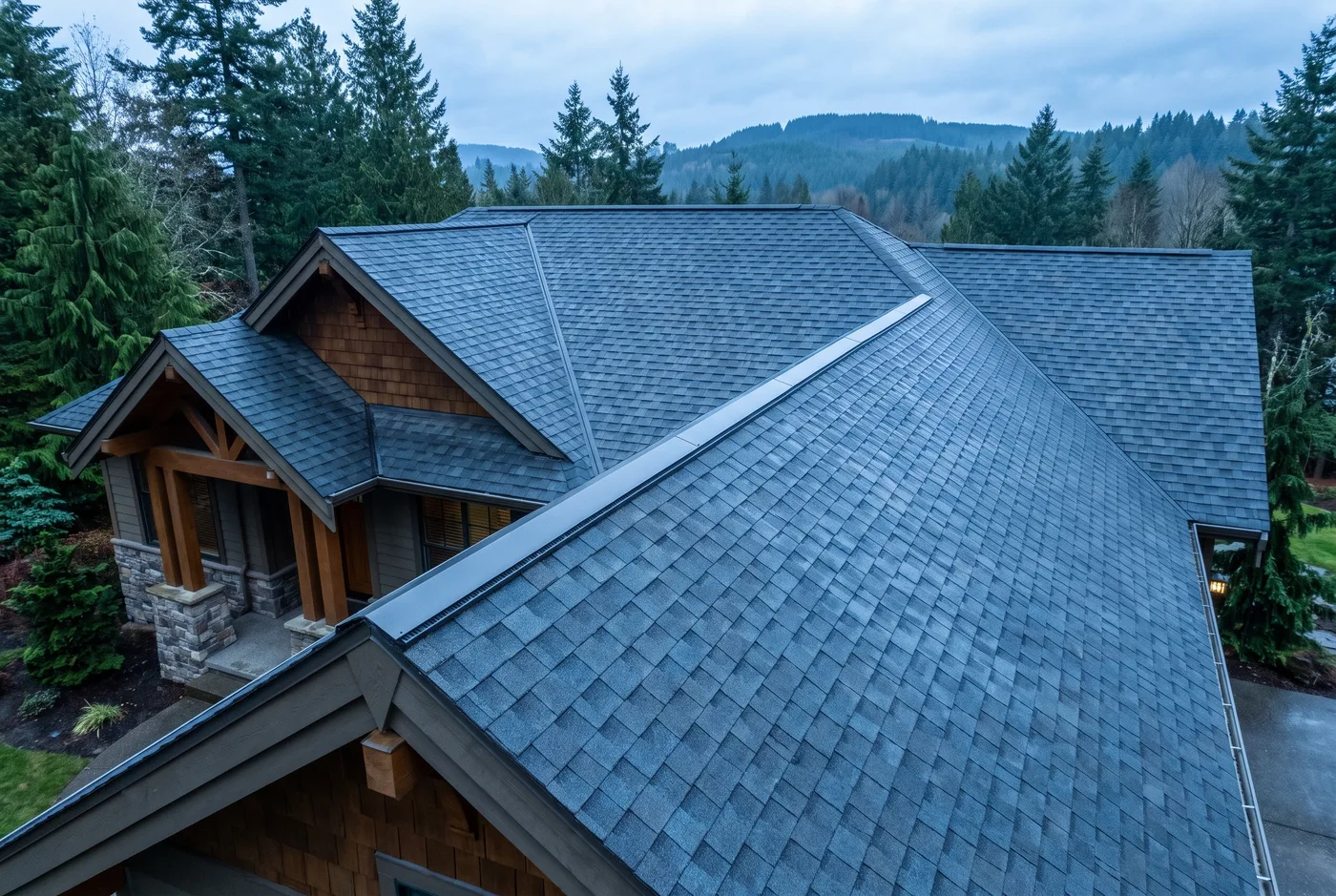
Stone-coated steel is a third path: steel panels or tiles with a bonded stone-granule coating, shaped to look like asphalt shingles, shake, or clay tile. Depending on the system, fasteners are hidden or driven into a batten, so most are not fully exposed like corrugated.
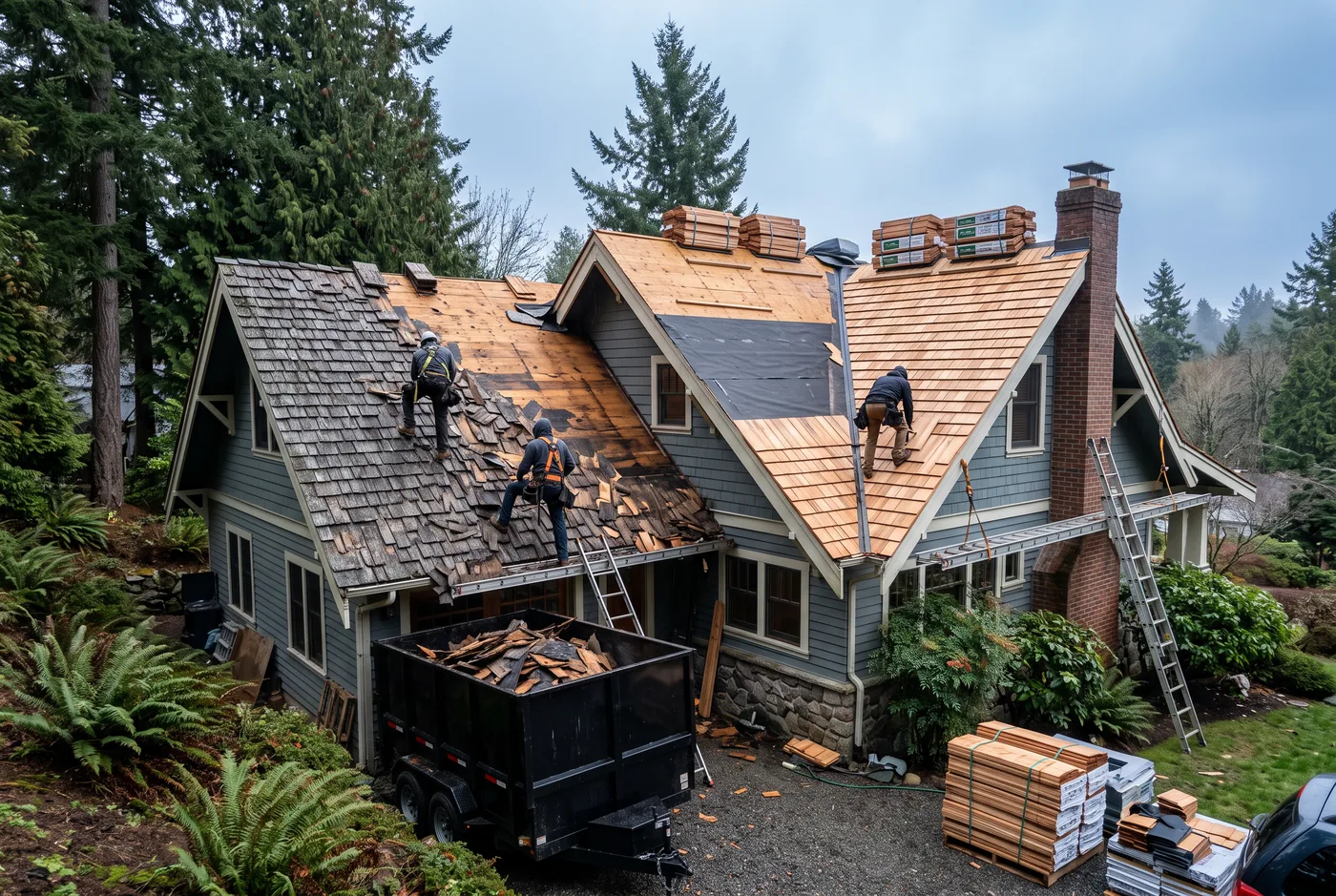
In a climate this wet — and one that drives salt into every seam near the water — that fastener difference isn’t just looks. It’s the difference between a roof you forget about and one you maintain. If you’re weighing a full tear-off, our standing-seam metal roofing inspections walk you through which profile fits your home and exposure.
Metal roof profiles compared
Here’s how the three common Whatcom choices stack up. Treat costs as estimates for a typical local home, not quotes. Roof complexity, access, and coastal spec all move the number.
| Profile | Fasteners | Lifespan (Whatcom) | Installed cost | Best use | Salt-air performance |
|---|---|---|---|---|---|
| Standing seam | Concealed clips, no face holes | 50+ years | $14,000–$45,000+ | Primary homes, waterfront, “forever” roofs | Excellent — nothing exposed to rust |
| Corrugated / exposed-fastener (ag / R-panel) | Screwed through the face, neoprene washers | 20–40 years | $9,000–$24,000 | Barns, garages, sheds, tight budgets | Fair — washers and screws rust and back out |
| Stone-coated steel | Concealed or batten-screwed; tile/shake look | 40–50 years | $13,000–$40,000+ | Homes wanting a shingle or shake look with metal toughness | Good — coated steel, but check fastener grade |
Standing seam costs the most. The metal is heavier, the panels lock with hidden clips, and the install takes more labor. You’re paying for a roof with no holes punched through the water-shedding surface. That’s exactly where the value lives here. For a full price breakdown and what drives each number, see our guide to standing seam metal roof cost.
What metal roof spec holds up near saltwater?
Profile matters, but coastal spec matters just as much. And it applies to every profile. Within sight of saltwater, insist on three things:
- 24-gauge steel. Thinner 26- or 29-gauge metal dents, oil-cans, and rusts faster. Twenty-four gauge is the standard for toughness and wind resistance, and waterfront homes should not go thinner. Marine-grade aluminum is another strong option on the most exposed shorelines.
- Kynar 500 / PVDF coating. A marine-grade Kynar 500 (PVDF) finish resists fading, chalking, and the chloride corrosion that breaks down budget SMP paint in salt air. Near the water, it’s a must, whatever profile you pick.
- Rust-resistant fasteners and clips. Stainless or coated fasteners, clips, and flashing cost a little more and are a must on the coast. Cheap fasteners are the fastest way to a 15-year failure on a 50-year roof. And they’re the exact weak point exposed-fastener panels put right out in the weather.
This is where standing seam pulls ahead near the water. The fasteners hide under the seams, so the most rust-prone part of the roof is protected. On an exposed-fastener roof, those washers and screws sit out in the salt and sun, dry out, and eventually leak or back out. Metal outlasts other materials here mostly because of these details. Our guide on how long a metal roof lasts covers the lifespan math in depth.
Which metal roof profile should you choose?
Match the profile to the building and your exposure, not just the budget.
Choose standing seam for the house you actually live in, especially near the water or on a wind-exposed lot out toward Lynden, Ferndale, or Cherry Point. Hidden clips let the roof flex with strong outflow gusts instead of relying on screws to hold panels flat. And a smooth profile sheds Douglas fir needles and moss more cleanly than a ribbed valley that traps debris. It’s the roof we recommend for a primary home, and the one that usually outlives two or three shingle roofs.
Choose corrugated or exposed-fastener panels for a barn out in Everson, a detached garage in Ferndale, a shop, or an outbuilding where budget beats lifespan. It’s an honest, low-cost choice for buildings you’re not going to fuss over. Just plan on checking and re-tightening or replacing fasteners now and then in our wet winters.
Consider stone-coated steel if you want the look of shingles, shake, or tile with metal toughness. For example, you can keep a traditional streetscape in historic Fairhaven or downtown Lynden and still get a 40–50-year roof. It looks like a normal roof from the ground but sheds rain and resists wind like metal.
If you’re comparing metal against a re-roof in asphalt, our asphalt shingle roofing page lays the two side by side. And whichever profile you pick, a full roof replacement here is priced around your slopes, exposure, and access, not a generic per-square rate.
The Whatcom bottom line
For most homes in Whatcom County, standing seam is the right long-term roof: hidden fasteners, a clean watertight seam, and 50-plus years of shrugging off rain, wind, and snow. Corrugated and exposed-fastener panels earn their place on barns and outbuildings. Stone-coated steel bridges the two when you want a traditional look. The profile you choose changes the price and the upkeep. But the coastal spec — 24-gauge, Kynar 500, rust-resistant fasteners — is what keeps any metal roof alive near the water.
Not sure which profile fits your home and exposure? Glacier Roofing is a licensed, bonded, and insured Whatcom County contractor. Our on-site inspections and written estimates are free — no surprises, just a straight answer. We’ll tell you honestly whether standing seam, exposed-fastener, or stone-coated steel is the right call for your roof and budget. Contact us or call (360) 483-1333 to schedule your free inspection in Bellingham, Ferndale, Lynden, Blaine, Everson, or the Mount Baker foothills.
Frequently asked questions
Is standing seam better than corrugated?
Which metal roof is best near saltwater?
What is an exposed-fastener metal roof?
How long do the different metal roof profiles last in Whatcom County?
Is stone-coated steel a good choice for Whatcom County?
Ready to move forward?
Talk to a local Whatcom roofer — free inspection, honest advice.