Published July 20, 2026 · by Glacier Roofing
Key takeaways
- Seamless aluminum or steel gutters sized for our wet Pacific Northwest rain are the right call on almost every Whatcom County home. Sectional store-bought gutters leak at every joint.
- Under Douglas fir, gutter guards are usually worth it: micro-mesh keeps fine needles out and cuts cleaning from several times a year to once or twice.
- Too-small 5-inch gutters and small downspouts are the most common reason Whatcom County gutters overflow and rot the fascia behind them.
- New gutters run roughly $1,200–$6,500 depending on home size, material, downspout count, and whether you add guards.
- Gutters, drip edge, fascia, soffit, and downspouts are one system — if any piece fails, water ends up in the wrong place.
In Whatcom County, gutters work harder than almost anywhere. Our wet Pacific Northwest winters dump a lot of water that has to go somewhere. Douglas fir needles keep trying to clog the path. Near the bay, salt air eats anything cheap. Gutters that are too small or have no guards overflow, rot your fascia, and dump water where it should never go. Here’s how to size, guard, and price gutters that last around here.
For Whatcom County homes, go with seamless aluminum or steel gutters sized for our wet winters. On lots shaded by Douglas fir, gutter guards are usually worth it. Expect new gutters to run about $1,200 to $6,500. The price depends on home size, material, how many downspouts you need, and whether you add guards.
Why do gutters fail faster in Whatcom County?
Whatcom County gutters fail faster because they fight more water and more debris than almost anywhere. Bellingham gets about 35 inches of rain a year — far more toward the foothills — and most of it comes between November and January. It doesn’t fall gently, either — one big storm can drop inches in a day. A gutter that handles a summer drizzle just can’t move that much water. So it pours over the front edge in the very storms when you need it most.
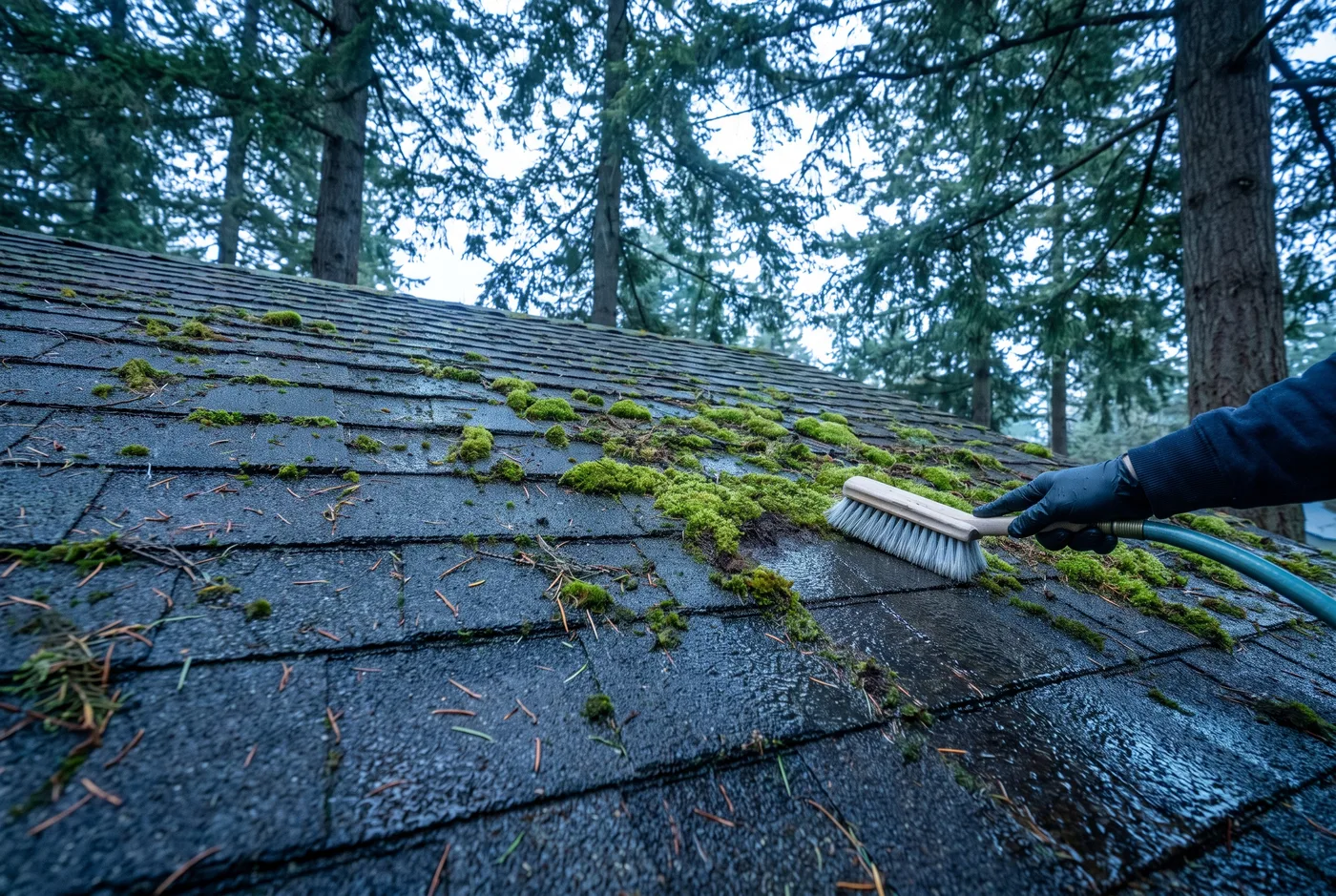
Then there’s the debris. Most Whatcom County roofs sit under Douglas fir, and fir needles are the worst thing you can drop into a gutter. They’re small enough to slip through basic screens. They mat into a thick felt that holds water. And they break down into sludge that clogs downspouts from the bottom up. Add moss washing off shaded north slopes, and the gutter is half-full of gunk before the leaves even fall.
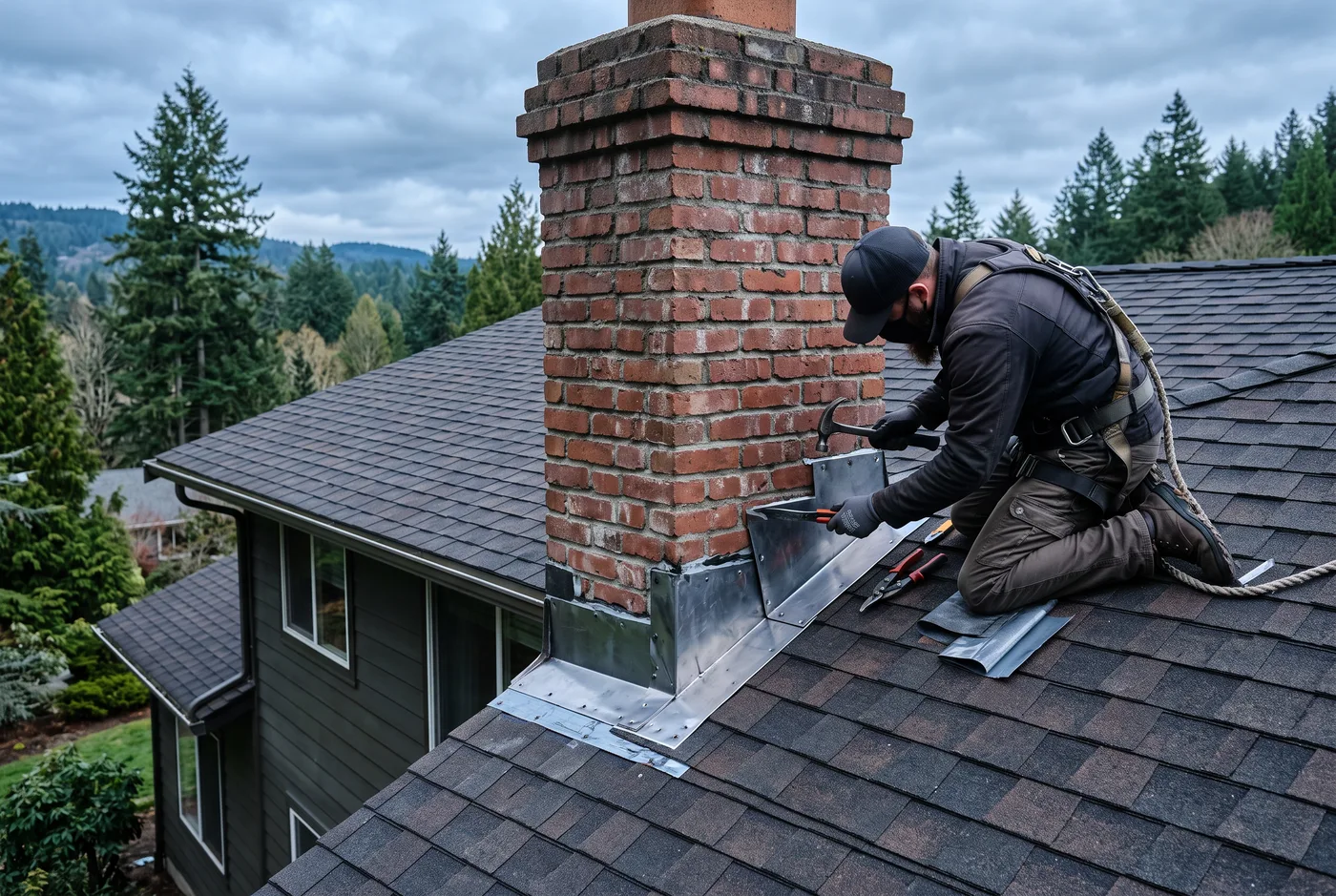
Wind and — near the bay — salt air finish the job. On waterfront lots at Birch Bay, Blaine, or Cherry Point, cheap galvanized gutters and bargain fasteners rust out within a few years. And hard northeast outflow winds funnel down the Nooksack and Fraser valleys through Everson, Sumas, and Lynden every winter. They work hangers and spike-and-ferrule systems loose until the gutter sags and loses its slope. Once the slope is gone, water pools, overflows at the low spot, and rots the fascia behind it. When gutters overflow against the roof edge, they also swamp the flashing that seals your roof-to-wall joints — and that’s where inside leaks start.
What gutter and guard options work best in Whatcom County?
The best Whatcom County gutter is seamless, rust-resistant, and sized for real rain. The best guard is the one that keeps fir needles out but still lets a downpour through. Here’s how the common options compare for our weather:
| Option | Typical cost | Best for |
|---|---|---|
| Seamless aluminum (5”–6”) | $1,200–$4,000 installed | Most Whatcom County homes — rust-resistant, low upkeep, good value |
| Seamless steel (galvalume) | $2,500–$5,500 installed | High-wind valley and open-country spots and heavy fir-needle loads that need stiffer metal |
| Copper or zinc | $6,000+ installed | Premium and historic homes; zinc runoff also helps slow moss |
| Sectional store-bought | Lowest upfront | Almost nothing here — every joint is a future leak in our rain |
| Micro-mesh guards | +$8–$15 per ft | Homes under Douglas fir — the only guard that reliably blocks fine needles |
| Reverse-curve / surface-tension guards | +$10–$20 per ft | Open spots with leaves; weaker on fine fir needles |
| Screen or foam inserts | +$2–$6 per ft | Budget stopgap only — fir needles and moss clog them fast |
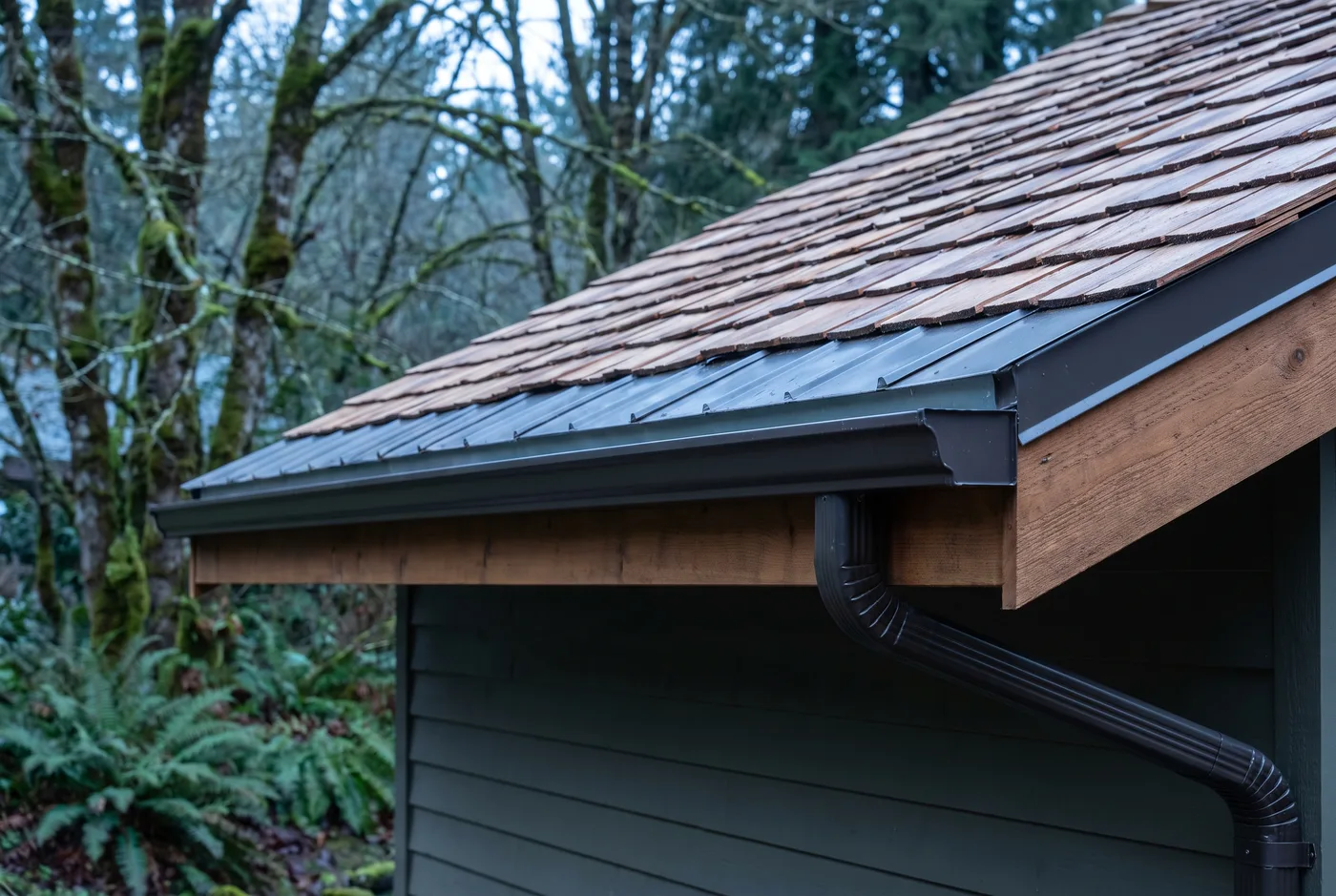
Seamless aluminum is the workhorse around here, and for good reason. It’s formed on-site into one long piece per run, so there are no mid-run joints to leak. It also handles salt air near the bay far better than plain galvanized steel. Where wind and debris are extreme, galvalume steel adds stiffness. Sectional gutters from a big-box store are a false savings — the snap-together seams are the first thing to fail in our rain. Professional seamless gutter and flashing installation sizes the metal, hangers, and downspouts to your actual roof, not to whatever comes in a 10-foot box.
What size gutters and downspouts do Whatcom roofs need?
Most Whatcom County homes do better with 6-inch gutters and oversized downspouts than with the standard 5-inch setup. A 6-inch K-style gutter carries a lot more water than a 5-inch. Pair it with 3x4-inch downspouts instead of the common 2x3, and it moves the water our storms really produce. On a large or steep fir-shaded roof that dumps runoff into one spot, that extra room is the difference between draining and overflowing.
How many downspouts you have matters as much as their size. A long gutter with just one downspout at the end will flood at the far corner, no matter how big the trough is. A good rule: plan a downspout about every 30–40 feet of run. Add one wherever a valley funnels two roof planes into a single spot. Getting the slope right — about a quarter inch of fall per 10 feet toward each downspout — keeps water moving instead of pooling and freezing in a cold snap.
How do fascia, soffit, downspouts, and drip edge work together?
Your gutters are one piece of an edge system. The whole system has to work, or water ends up in the wrong place. Here’s how the parts connect:
- Drip edge is the metal flashing along the roof’s edge. It sends runoff off the deck and into the gutter instead of letting it wick back behind the fascia. In our climate it’s not optional. Without it, water sneaks behind the gutter and rots the board it’s bolted to.
- Fascia is the flat board the gutter hangs from. If the fascia is soft or rotted, no hanger will hold the slope. So we check it and often replace it as part of a gutter job.
- Soffit is the underside of the eave. Overflowing gutters and back-wicking water stain and rot soffits, and can push moisture into the attic.
- Downspouts carry water down and, just as important, away from the foundation. A downspout that dumps at the base of the wall just moves your water problem from the roof to the crawlspace.
Because these pieces overlap, a gutter overflow rarely stays a gutter problem. Left alone, it turns into rotted fascia, a soaked soffit, and finally a job for roof repair instead of a simple gutter fix. Catching a sagging run or a failing drip edge early is far cheaper than rebuilding the eave later.
Are gutter guards worth it in Whatcom County?
Under Douglas fir, gutter guards are usually worth it, and micro-mesh is the guard that earns its keep. The math is simple. Fir needles make Whatcom County homeowners clean bare gutters several times a year. And cleaning gutters on a wet, two-story roof is the kind of ladder work that sends people to the ER. A good micro-mesh guard blocks needles, blowing grit, and moss while letting our heavy rain flow straight through. That cuts the chore to a once-or-twice-a-year rinse.
Guards aren’t magic, and honest expectations matter. Cheap screens and foam inserts clog with fine needles almost as fast as bare gutters, so they’re a waste of money here. Even good micro-mesh collects needle dust and moss spores on top and needs a rinse now and then. On open, tree-free lots the payback shrinks, since there’s little to keep out. So the answer depends on the lot. Heavy fir cover makes guards a clear win. A wide-open farm or waterfront lot may not need them. When we’re up there for your yearly roof inspection and maintenance, we’ll tell you straight whether guards pay off on your home.
How much do new gutters and guards cost?
New gutters in Whatcom County usually run $1,200 to $6,500. Where you land depends on home size, material, downspout count, and guards. A single-story home in seamless 5-inch aluminum with a couple of downspouts sits near the bottom. A bigger two-story home in 6-inch galvalume with extra downspouts and full micro-mesh guards climbs toward the top. Copper or zinc goes past it entirely.
Two things affect the number. First, home size and downspout count set the base — more runs, more corners, and more downspouts all add material and labor. Second, near the bay, marine-grade materials aren’t an upsell. They’re what keeps the gutters from rusting out in a few salty winters. These ranges are for learning, not a quote. A free on-site measure is the only way to get your real number. Clean, well-sloped gutters are also the cheapest insurance for the rest of your roof. Pair them with the fall tasks in our Whatcom winter storm prep checklist, and you head into November ready.
Get gutters sized for Whatcom rain
If your gutters overflow in every downpour, sag along the run, or you’re tired of climbing a wet ladder to pull fir needles, it’s time for a system built for this place. Seamless metal, real drip edge, enough downspouts, and the right guards will move our wet-winter rain off your home for decades — instead of rotting the fascia behind it.
Call Glacier Roofing at (360) 483-1333 or reach out through our contact page. We’ll come out anywhere in Whatcom County — Bellingham, Ferndale, Lynden, Blaine, Everson, and the Mount Baker foothills. We’re a licensed, bonded, and insured Whatcom County roofing contractor. Our roof inspections are free, and every install is backed by our workmanship warranty.
Frequently asked questions
Are gutter guards worth it in Whatcom County?
How much do new gutters cost?
What size gutters do Whatcom County homes need?
Do I still have to clean gutters if I have guards?
Can gutters be repaired, or do they need full replacement?
Ready to move forward?
Talk to a local Whatcom roofer — free inspection, honest advice.