
Published July 27, 2026 · by Glacier Roofing
Key takeaways
- True slate roofs are rare in Whatcom County; most 'slate' repairs turn out to be synthetic/composite slate or a slate-look product.
- Individual cracked or slipped slates can be replaced one at a time — a repair, not a re-roof — if the field and flashing are sound.
- Flashing failures, not the slate itself, cause most leaks on slate and slate-look roofs.
- We're honest: we don't install new natural slate here, and for most owners a standing-seam metal or synthetic-slate re-roof is the better long-term value.
- Bring us the roof and we'll tell you what you actually have and whether it's a repair or a replacement — with photos.
Genuine slate roofs are rare in Whatcom County, and most 'slate' repairs turn out to be synthetic or composite slate. Either way, individual cracked or slipped slates can usually be replaced one at a time — a repair, not a re-roof — as long as the field and flashing are sound, and most leaks trace back to flashing rather than the slate itself. We repair existing slate and slate-look roofs honestly; we don't install new natural slate here, and for most owners a standing-seam metal or synthetic-slate re-roof is the better long-term value.
Search “slate roof repair” in Whatcom County and you’ll find very few roofers who’ll tell you the truth: true natural slate is uncommon here, and a lot of what people call a slate roof is actually a synthetic slate-look product. Getting that right is the whole game, because it changes how the roof should be repaired — and whether repair is even the right move.
First, what do you actually have?
- Natural slate — real stone. Heavy, cold to the touch, rings when tapped. Durable but a specialty roof: replacement slates and skilled slate labor are hard to source in the area.
- Synthetic / composite slate — a molded polymer or rubber product that mimics slate at a fraction of the weight and cost. Common on newer local homes and repaired differently than stone.
We confirm which one you have on a free roof inspection before we touch anything. Repairing composite slate like natural slate (or vice versa) is how well-meaning fixes turn into new leaks.
Most “slate” leaks are flashing leaks
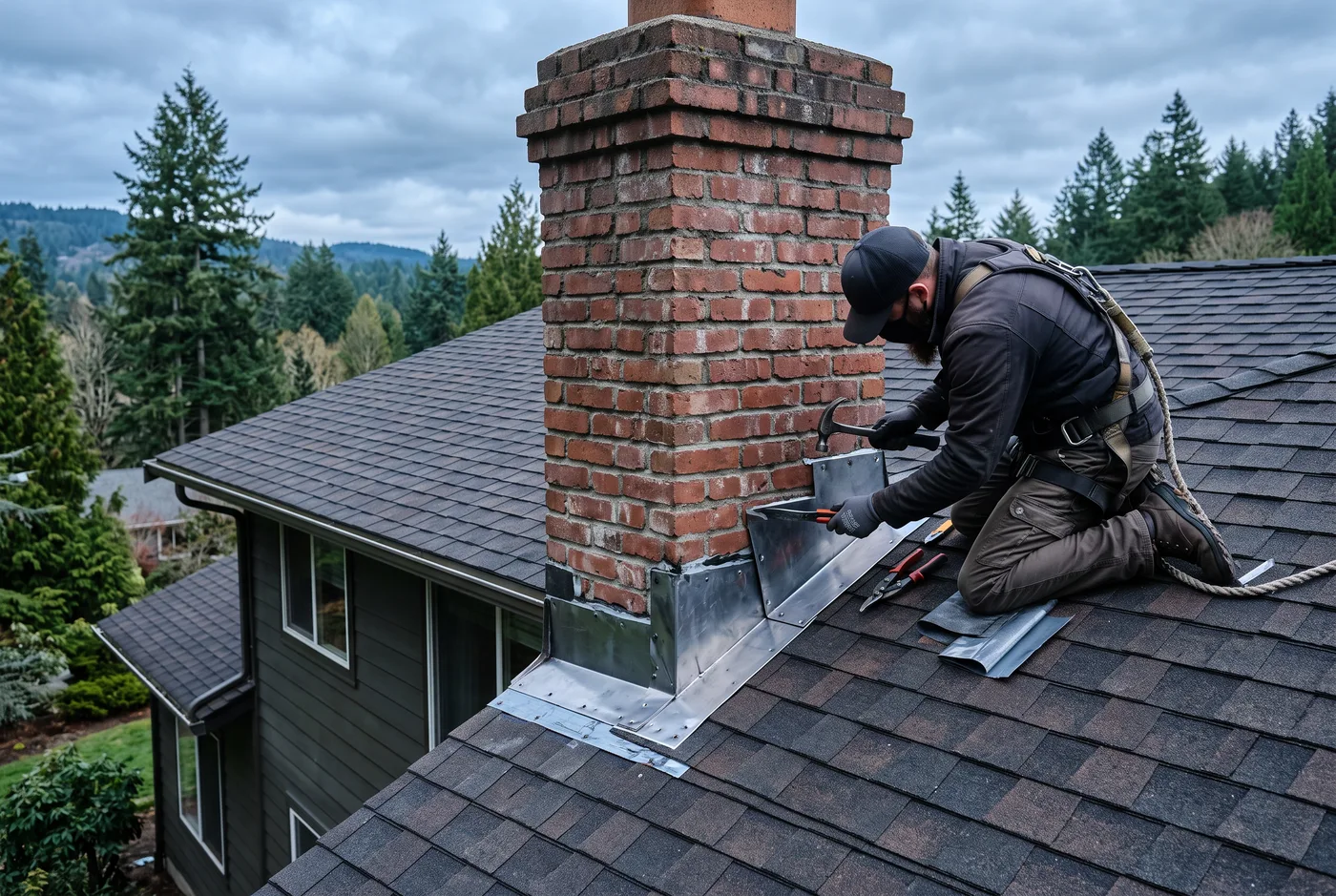
On both natural and synthetic slate, the slates usually outlast the metal around them. Valleys, chimney and skylight flashing, and pipe penetrations age and open first. Water then runs along the deck before it drips, so the interior stain rarely sits under the actual breach. The fix is to trace the leak uphill to its true source and re-detail the flashing — not to disturb sound slate. That’s the same leak-tracing discipline we bring to every roof repair in the county.
Repair — or re-roof in something built for this climate?
If you’ve got a sound roof with a few failed slates or a flashing problem, repair it. There’s no reason to tear off a healthy roof.
But if the roof is failing widely, if slates are delaminating, or if sourcing replacement slate and slate labor is impractical, most owners get more value from a re-roof in a system built for this climate — standing-seam metal (50+ years, sheds moss, rain, and snow, our top pick for most homes) or a quality synthetic slate that keeps the look without the weight and sourcing headaches. We lay out the honest repair-vs-replace math and let you make the call.
What we won’t do is install a new natural slate roof and pretend it’s the practical choice here. Straight advice, then a roof we can stand behind.
Frequently asked questions
Can you repair a slate roof in Whatcom County?
Is my roof real slate or synthetic slate?
Why does my slate roof leak if the slates look intact?
Should I repair my slate roof or replace it with something else?
Do you install new natural slate roofs?
Roof Repair in Whatcom County
Local Whatcom crew, free on-site inspection, honest repair-vs-replace advice.